

Start with the guide closest to your situation, then use Call Now when you are ready to talk to an independent provider covering Omaha.
Start with the question you have
Each guide is written to answer one question completely. Pick the one that matches what you are asking right now.
| Guide | Read it when |
|---|---|
| Signs and inspection: foundation repair | you smell mustiness or see stains |
| Comparing foundation repair quotes | comparing foundation repair quotes |
Household pest cheat sheet
| Pest | What it looks like | Typical sign | Where to look |
|---|---|---|---|
| Brown recluse and black widow | Violin mark and six eyes; shiny black with red hourglass | Irregular webs in storage and woodpiles | Garages, boxes, undisturbed corners |
| American cockroach | Reddish-brown, up to two inches, yellow edge on the head | Single large roaches at night | Drains, garages, mulch, crawl spaces |
| Bed bug | Reddish-brown, flat, apple-seed size | Rust spots, shed skins on mattress seams | Mattress, headboard, bed frame |
| Subterranean termite | Small, pale workers; winged swarmers in spring | Mud tubes, discarded wings | Foundation, crawl space, wood touching soil |
| Carpenter ant | Large, black or red and black | Coarse sawdust-like frass near wood | Damp wood, window frames, decks |
| Odorous house ant | Small, dark brown, coconut smell when crushed | Trails along counters and walls | Kitchens, bathrooms, wall voids |
| German cockroach | Light brown, two dark stripes behind the head, about half an inch | Droppings like pepper, egg cases, musty odor | Behind appliances, under sinks, in cabinet hinges |
| Mosquito | Slender, long legs, whining flight | Bites at dawn, dusk or daytime | Standing water, shaded vegetation |
Pest control terms explained
- Monitoring: glue boards, traps and inspection logs that show whether the plan is working
- Integrated pest management (IPM): inspect, identify, fix the cause, then use the least risky effective product
- Bait: a slow-acting food-based product that insects carry back to the nest
- Exclusion: sealing gaps, installing sweeps and screening vents so pests cannot enter
- EPA-registered label: the legal instructions for where and how a product may be used
- Tamper-resistant bait station: a locked box that holds bait out of reach of children and pets
- Insect growth regulator (IGR): a product that stops young insects from becoming breeding adults
Myths and facts
- Myth: a clean house cannot get pests. Fact: pests follow food, water and shelter, and even tidy homes can have them.
- Myth: pests only appear in summer. Fact: rodents, roaches and spiders stay active indoors in winter.
- Myth: one treatment solves everything. Fact: many pests need a follow-up visit and fixes to entry points.
- Myth: spraying the ants you see ends the problem. Fact: baits that reach the nest work better and sprays can scatter a colony.
- Myth: natural means harmless. Fact: any pesticide, natural or not, should be used as the label directs.
How a foundation visit works, step by step
A sound foundation assessment is evidence first and a repair proposal second. Knowing the order helps you tell a diagnosis from a sales pitch.
- Interview: when you noticed the problem, what changed (drought, rain, plumbing leaks, remodeling) and where it shows.
- Exterior walk: cracks, gaps at windows and doors, brick and stucco condition, grading, gutters, downspouts, trees near the house.
- Interior check: sticking doors and windows, floor slopes, drywall cracks, gaps at trim and ceilings.
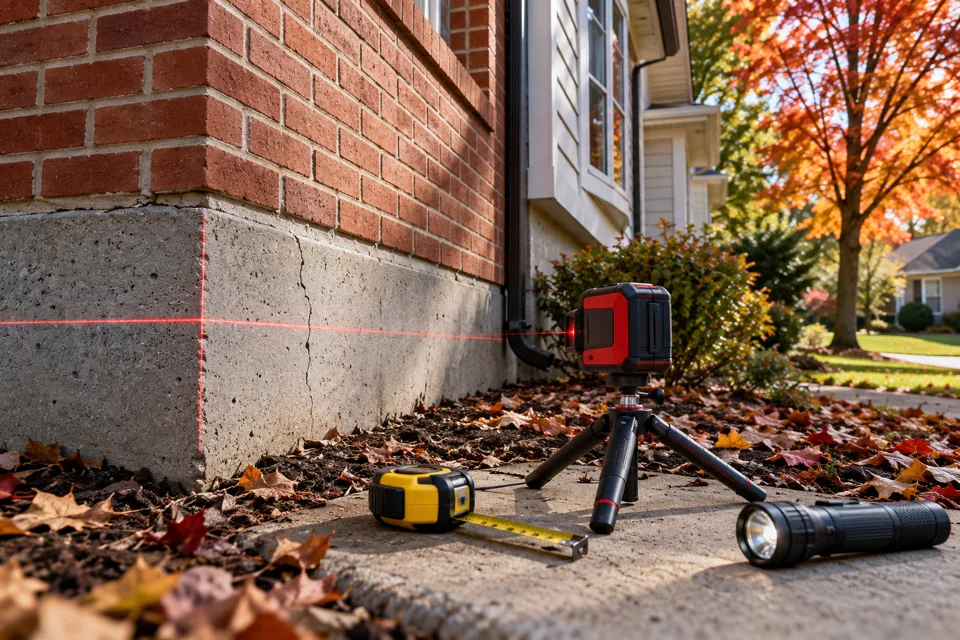
- Measurements: floor elevations with a manometer or laser, crack widths and patterns, photos with a scale.
- Cause: soil moisture, drainage, plumbing leaks, tree roots or construction issues, and which ones apply.
- Written findings: what is cosmetic, what is structural, what to monitor and what to repair, in order.
What shapes the written scope
Two foundation jobs on the same street can differ widely. The written scope should say what was found and which of these applied.
- How much the structure has moved and where, from elevation readings
- The foundation type: slab-on-grade, post-tension slab, pier and beam, basement or crawl space
- Access for equipment, utilities and landscaping, and any permit or engineer requirements
- Drainage, grading, gutters and plumbing leaks that feed the problem
- The soil, especially expansive clay, and how wet or dry it has been
Safety and when an engineer should be involved
Independent of anyone selling a repair, a structural engineer can evaluate movement and design the repair, and an engineer's report is useful for a sale, an insurance claim or a large repair. Keep out of a crawl space or basement with standing water or visible structural distress, and think about utility lines before any digging.
Questions to ask a foundation repair company
- What did you measure, and what do the numbers say?
- What happens to landscaping, utilities and flooring during the work?
- Is the repair engineered, and can I see the design?
- What caused the movement, and how will you address the cause?
- How will you verify the result?
What makes foundation work different in Omaha
Omaha has older brick and block foundations, finished basements and clay and loess soils that move with moisture. Freeze-thaw cycles in winter and spring heave and crack concrete and masonry.
Heavy spring rains saturate soil, add pressure to basement walls and find gaps at the footing. Drainage, grading and downspout placement strongly affect how much water reaches the foundation. Put the question to the provider: how do these local conditions affect the diagnosis and the repair at your address?
Foundation repair across Omaha and nearby cities
Foundation Repair Omaha NE covers Omaha, Nebraska and the surrounding area, including Bellevue, Papillion, La Vista, Elkhorn and Ralston. Calls and requests are confirmed address by address.
Describe the cracks, sticking doors or floor slopes through Call Now at the top of the page. An independent foundation provider will answer, confirm your address, inspect the property and put the scope in writing.